
Pharmaceutical & Biotech Industry Safety & Security
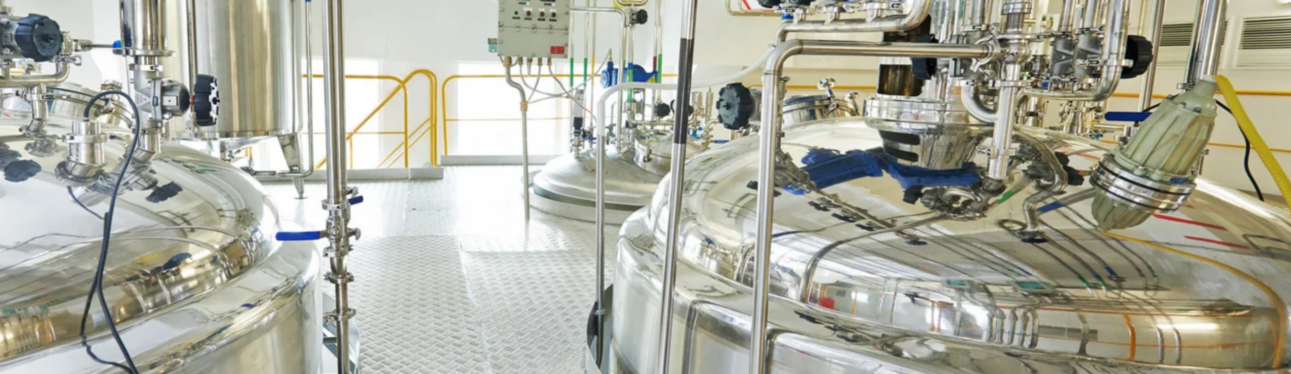
The pharmaceutical and biotechnology industries faces a unique convergence of hazards: complex chemistry (APIs, high-potency compounds, reactive processes), specialized manufacturing environments (sterilization systems, powder handling), stringent regulatory oversight (FDA, ICH, EMA), and the operational pressures of technology transfer, capacity expansion, and workforce continuity. Effective process safety management in pharmaceuticals and biotechnology requires not just regulatory compliance, but a deep understanding of reaction kinetics, containment technologies, hazardous-area classification, combustible-dust risks, and the operational realities of batch manufacturing—all integrated into a cohesive safety culture and management system.
Pharmaceutical & Biotechnology Safety Expertise
AcuTech brings specialized expertise in pharmaceutical and biotechnology process safety, with a portfolio spanning enterprise PSM transformation, site-level safety maturity assessments, API manufacturing risk management, combustible-powder safety, asset integrity, and operational readiness. Our approach combines industry best practices, pharmaceutical-specific risk methodologies, and hands-on facilitation to help organizations establish consistent safety governance, identify and control major hazards, strengthen asset management, and build the operational discipline required for safe, reliable pharmaceutical manufacturing.
Whether you are standardizing PSM across a global pharmaceutical or biotech enterprise, assessing process-safety maturity at an API manufacturing site, managing risks associated with reactive chemistries and hazardous materials, or strengthening controls for combustible-powder operations, AcuTech provides the technical depth and practical guidance to support continuous improvement in pharmaceutical safety & security.
Enterprise & Site-Level Process Safety Management
- Enterprise and site-level PSM/PSRM program design
- Maturity assessment and implementation roadmaps
- Standards development and governance
- PSM audits and continuous improvement
- Metrics and performance-management systems
Process Hazard Analysis
- HAZID and What-If/Checklist studies
- HAZOP facilitation and revalidation
- LOPA and risk-based PHA prioritization
API & High-Potency Manufacturing Risk Management
- Assessment of reaction hazards and flammable/toxic chemicals
- Hydrogenation, solvent handling, & reactive chemistry risk assessment
- Technology-transfer risk evaluation
- Containment and control-system review
Combustible-Powder & Dust Hazard Management
- Powder inventory and risk ranking
- Dust hazard assessments per NFPA 654 & NFPA 652
- ATEX/Explosion Protection Document reviews
- Basis-of-safety evaluations
- Integration of controls into procedures and training
Asset Integrity & Reliability
- Mechanical/asset-integrity program development
- Safety-critical equipment identification and qualification
- Inspection, testing, & preventive maintenance programs
- Critical-spares management and quality assurance
- Integrity-performance improvement
Operational Readiness
- Pre-Startup Safety Review (PSSR) systems
- Commissioning and qualification support
- Action closeout and change-management integration
- Startup readiness for new or modified assets
Process Safety Information & Engineering Assurance
- PSI compilation and governance
- Review of P&IDs, equipment data, and relief-system information
- Hazardous-area classification documentation
- Design standards and safety-critical control review
Quantitative Risk & Consequence Assessment
- Quantitative Risk Assessment (QRA)
- Consequence modeling for toxic, flammable, & reactive releases
- Facility siting studies and analysis
- Dust-release scenario assessment
Management-System Integration
- Management of Change (MOC) program development
- Operating procedures and process documentation
- Contractor management and oversight
- Emergency-response planning
- Incident investigation and root-cause analysis
- Audit follow-up and corrective-action management
- Workforce engagement and competency development
Training & Leadership Development
- Process-safety awareness programs
- Leadership and safety-culture training
- Role-based competency development
- Practical training tied to hazards and operating procedures
AcuTech’s consultants are well versed in the codes, standards, and regulatory frameworks governing pharmaceutical manufacturing and will reference these as well as each client’s applicable regional and local requirements.
- FDA Guidance for Industry – Process Safety Management. The FDA has provided guidance on process safety management expectations for pharmaceutical manufacturers, with emphasis on hazard identification, risk assessment, and control of major incident risks. AcuTech applies FDA expectations to ensure that pharmaceutical PSM programs meet regulatory intent while supporting practical implementation across sites.
- OSHA Process Safety Management Standard (29 CFR 1910.119). While OSHA PSM applies primarily to threshold chemicals, many pharmaceutical facilities are subject to PSM requirements. AcuTech ensures that PSM programs comply with OSHA requirements and extend those practices to non-threshold hazards through robust management systems. International Organization for Standardization (ISO) 14644 – Cleanrooms & Controlled Environments ISO 14644 establishes requirements for pharmaceutical and biopharmaceutical cleanroom environments, including classification, monitoring, and control. AcuTech incorporates cleanroom requirements into operational readiness and asset-integrity programs.
- NFPA 654 – Standard for the Prevention of Fire & Dust Explosions from Manufacturing, Processing & Handling of Combustible Particulate Solids. NFPA 654 provides comprehensive requirements for managing combustible-dust hazards in pharmaceutical powder-handling operations. AcuTech applies NFPA 654 principles to dust hazard assessments, equipment selection, and procedure development.
- NFPA 652 – Standard on the Fundamentals of Combustible Dust. NFPA 652 establishes the foundational principles for combustible-dust safety. AcuTech applies NFPA 652 methodology to pharmaceutical powder-handling operations to ensure consistency with current dust-explosion prevention standards.
- ATEX Directive 2014/34/EU & 2014/35/EU – Equipment & Explosive Atmospheres. In European pharmaceutical facilities, ATEX requirements govern equipment design, selection, and operation in areas where explosive atmospheres may be present. AcuTech ensures that European API and specialty pharmaceutical sites comply with ATEX requirements and maintain appropriate Explosion Protection Documents.
- ICH Q9 – Quality Risk Management. ICH Q9 provides a framework for quality risk management in pharmaceutical development and manufacturing. AcuTech applies ICH Q9 risk-assessment principles alongside process-safety methodologies to ensure alignment between quality and safety objectives.
- ICH Q14 – Analytical Procedure Development. ICH Q14 addresses control strategies for pharmaceutical manufacturing. AcuTech integrates control-strategy development with process-safety risk assessment to ensure that controls address both quality and safety risks.
- ISO 31000 – Risk Management – Principles & Guidelines. AcuTech applies ISO 31000 principles to structure enterprise-level risk-management frameworks and ensure consistency across PSM, quality, and operational domains.
- Center for Chemical Process Safety (CCPS) Guidelines. AcuTech leverages CCPS guidelines on process safety management, hazard analysis, risk assessment, and asset integrity to ensure alignment with industry best practices in pharmaceutical manufacturing.
AcuTech typically engages with pharmaceutical manufacturers in one of several ways:
Strategic PSM Assessment & Transformation
For organizations seeking to establish or upgrade enterprise PSM standards and governance.
Typical duration: 3–6 months.
Outcomes: Corporate PSM standards, implementation roadmaps, training program design, and establishment of governance structures.
Site-Level PSM Maturity Assessment
For individual pharmaceutical sites requiring a comprehensive evaluation of PSM maturity and identification of improvement opportunities.
Typical duration: 2–4 months.
Outcomes: Prioritized improvement roadmap, gap analysis, risk-management recommendations, and implementation guidance.
Project & Operational Support
For ongoing hazard analysis, HAZOP facilitation, asset-integrity implementation, and operational readiness—delivered through embedded consulting, secondment, or project-based engagement.