Waterway Suitability Assessments
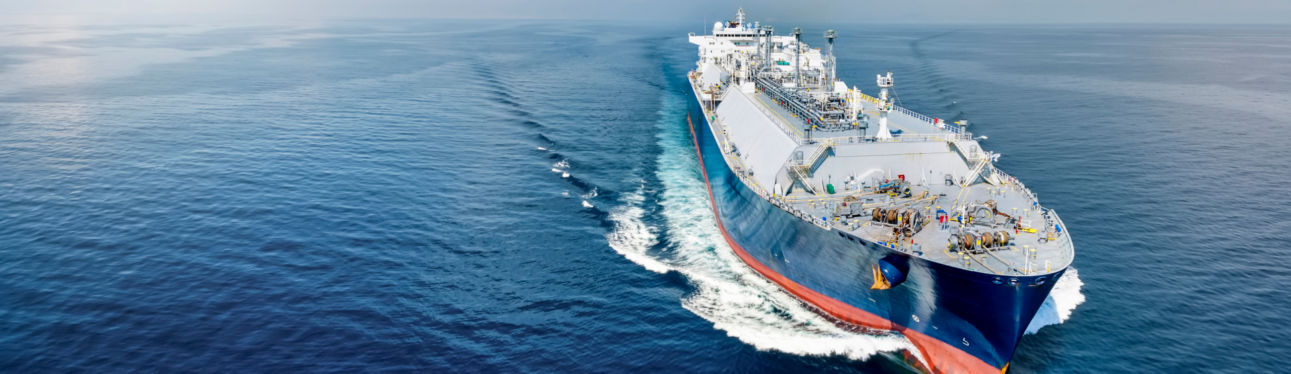
Waterway Suitability Assessments (WSAs) evaluate the maritime safety and security risks associated with proposed liquefied natural gas (LNG) and liquefied hazardous gas (LHG) vessel operations. The assessment considers the waterway, vessel transit routes, existing and projected marine traffic, facility interfaces, and available safety, security, and emergency response resources. It identifies practical measures needed to manage risks and support safe vessel operations.
Regulatory Requirements & USCG Coordination
For projects subject to the WSA requirements of 33 CFR Part 127, the assessment supports the U.S. Coast Guard (USCG) Captain of the Port’s evaluation of waterway suitability and issuance of a Letter of Recommendation to the agency responsible for project authorization. For applicable LNG projects, WSA activities are coordinated with the Federal Energy Regulatory Commission (FERC) pre-filing and application processes.
Our services support technically defensible assessments, informed regulatory review, and coordinated planning for LNG and LHG marine operations.
AcuTech’s WSA Approach & Methodology
AcuTech develops preliminary and follow-on WSAs and updates existing assessments to address terminal expansions, changes in vessel operations, and evolving waterway conditions. Our approach combines maritime risk assessment, stakeholder workshop facilitation, navigation and operational analysis, and consequence evaluation. We work with project developers, USCG personnel, pilots, port authorities, vessel operators, and emergency responders to identify concerns, evaluate safeguards, and develop practical risk management measures.
AcuTech authored the ANSI/API Standard 780 Security Risk Assessment (SRA) Methodology for the Petroleum and Petrochemical Industries (2013), which the Department of Homeland Security (DHS) and USCG have endorsed as an acceptable framework.
Whether developing a new LNG or LHG terminal, expanding an existing facility, or evaluating floating LNG and ship-to-ship operations, AcuTech helps identify maritime risks, establish practical safeguards, and prepare technically defensible assessments that support regulatory review and operational planning.
Contact us to discuss your project’s waterway suitability and marine risk assessment needs.
Learn how LNG Waterway Suitability Requirements and USCG regulations guide safe LNG operations and strengthen maritime safety.
Read the full blog series to learn best practices, risk management strategies, and lessons from industry experts.
WSA Development and Updates
- Letter of Intent preparation and submission support.
- Preliminary and follow-on WSA development consistent with applicable requirements of 33 CFR Part 127 and relevant USCG guidance, including NVIC 01-2011.
- WSA updates and revalidation for terminal expansions, changes in vessel size or traffic frequency, and changed waterway conditions.
- Port, facility, and vessel transit route characterization.
- Vessel characteristics and projected marine traffic assessment.
- Coordination with applicable regulatory review and project development milestones.
Navigation and Operational Safety Assessment
- Assessment of existing and projected vessel traffic, including cumulative effects of regional marine development.
- Evaluation of collision, allision, grounding, and vessel propulsion or steering failure scenarios.
- Assessment of channel, berth, turning-area, and anchorage interactions.
- Evaluation of pilotage, tug assistance, vessel movement coordination, and operating constraints.
- Assessment of simultaneous operations and interactions with neighboring facilities and waterway users.
- Marine simulation scenario development, coordination, and incorporation of findings into the WSA.
Safety, Security, and Consequence Evaluation
- Facilitated maritime safety and security risk assessment workshops.
- Development and evaluation of credible accidental and intentional release scenarios.
- Assessment of existing safeguards, additional risk management measures, and residual risk.
- Security risk assessment using API Standard 780, where appropriate.
- LNG Zones of Concern mapping using NVIC 01-2011 guidance, where applicable.
- Cargo-specific release, vapor dispersion, and fire consequence analysis using appropriate modeling tools.
Stakeholder and Emergency Response Coordination
- Identification and engagement of relevant maritime stakeholders and agencies.
- Workshop coordination with USCG personnel, pilots, ports, vessel operators, facility representatives, and emergency responders.
- Assessment of maritime safety, security, and emergency response capabilities and resource needs.
- Development of practical mitigation recommendations and identification of implementation responsibilities.
- USCG review support, responses to comments, and coordination of assessment revisions.
- Support for required WSA reviews, updates, and pre-operation reporting.
Related Marine Risk and Regulatory Support
Specialized LNG and LHG Operations
- Maritime risk assessment for floating LNG storage and regasification projects.
- Ship-to-ship transfer and LNG bunkering risk assessment.
- Assessment of larger LNG carriers and changes in vessel operating characteristics.
- Evaluation of marine operations during phased terminal development and expansion.
- Marine safety and security risk assessment support for deepwater port projects, coordinated with the applicable USCG and Maritime Administration review processes.
Maritime Security and Response Planning
- Assessment of applicable Maritime Transportation Security Act requirements and vessel or facility security interfaces.
- Security risk assessment and development of risk management recommendations.
- Evaluation of emergency response arrangements, interagency coordination, and resource availability.
- Technical support for marine operating procedures and safety and security planning.
FERC and Project Authorization Support
- WSA coordination with applicable FERC pre-filing and application processes.
- Maritime safety and security technical input to relevant FERC resource reports.
- Technical responses to agency information requests concerning vessel operations, waterway suitability, and marine risk.
- Maritime technical input to environmental reviews and project authorization documents.
- Coordination of WSA findings, operating assumptions, and proposed mitigation measures across project submissions.
AcuTech’s consultants are thoroughly versed in the codes, standards, and regulatory frameworks governing LNG and LHG marine operations and will refer to these as well as each client’s applicable federal, state, and local jurisdiction requirements.
- USCG Navigation and Vessel Inspection Circular (NVIC) 01-2011 – Guidance on Assessing the Suitability of a Waterway for Liquefied Natural Gas (LNG) Marine Traffic. Published by the USCG, NVIC 01-2011 is the primary regulatory guidance for conducting comprehensive waterway suitability assessments for LNG marine terminal operations. The circular establishes the framework for port characterization, facility and vessel route analysis, safety and security risk assessment, risk management strategies, and resource requirements.
- USCG Risk-Based Decision-Making Guidelines (COMDTINST M16010.3). The USCG’s risk-based decision-making framework provides the foundational methodology for evaluating maritime safety and security risks.
- 33 CFR 127 – Waterfront Facilities Handling Liquefied Natural Gas and Liquefied Hazardous Gas. This regulation establishes requirements for USCG oversight of LNG/LHG marine terminal operations, including waterway suitability determination, facility design standards, and operational procedures.
- 18 CFR 157.21 – FERC LNG Terminal Siting and Authorization Requirements. FERC regulations require applicants to submit a WSA to the USCG Captain of the Port and include WSA findings in their formal application to FERC.
- Sandia National Laboratories Safety & Security Studies – SAND2004-6258 & SAND2008-3153. These foundational Sandia reports on the consequences of large LNG spills over water provide the scientific basis for NVIC 01-2011 Enclosure 9 (Zones of Concern) and inform risk-based approaches to LNG consequence analysis.
- ANSI/API Standard 780 – Security Risk Assessment Methodology. Endorsed by the Department of Homeland Security (DHS) and USCG, ANSI/API Standard 780 provides a systematic five-step methodology for evaluating security vulnerabilities and risks at petroleum, chemical, and LNG facilities.
- 33 CFR Part 105 – Maritime Transportation Security Act (MTSA) – Facility Security Requirements. MTSA requires LNG marine terminal operators to develop Facility Security Assessments and Facility Security Plans.
- ANSI/DHS Chemical Facility Anti-Terrorism Standards (CFATS). CFATS establishes security requirements for facilities handling chemicals of interest, including LNG terminals.
- 46 CFR 150 – Transportation of Liquid Natural Gas. This regulation addresses LNG carrier design, construction, equipment, and operational procedures.
- 49 CFR 193, Subpart B – LNG Facility Siting. DOT regulations for LNG facility siting establish vapor dispersion and thermal radiation hazard zone requirements.
- NFPA 59A – Standard for the Production, Storage, and Handling of Liquefied Natural Gas (LNG). NFPA 59A provides comprehensive guidance on LNG facility design, operations, and safety.
AcuTech’s leadership and expertise in waterway suitability assessments and LNG marine risk management is reflected in our contributions to industry standards, methodology development, and regulatory guidance:
- ANSI/API Standard 780 – Primary Contractor & Thought Leader. AcuTech was the prime contractor for developing the ANSI/API Standard 780 Security Risk Assessment methodology, which is now the accepted standard for security vulnerability assessment across the petroleum, chemical, and LNG industries and is endorsed by DHS and the USCG. AcuTech continues to lead the application of this methodology in WSAs and other marine and facility security risk assessments.
- CCPS Guidelines for Analyzing and Managing Security Vulnerabilities of Fixed Chemical Sites. AcuTech was the primary contractor to the Center for Chemical Process Safety (CCPS) for developing foundational security vulnerability assessment guidance, which later informed the development of ANSI/API Standard 780 and enhanced security practices across the process industries.
- Collaboration with Sandia National Laboratories on LNG Consequence Modeling. AcuTech has worked directly with Sandia on consequence modeling of larger LNG carriers (including Q-Flex and Q-Max designs) and deepwater port scenarios. This collaboration led to USCG approval of PHAST modeling as an alternative to computational fluid dynamics (CFD) for LNG zone of concern analysis and resulted in regulatory updates reflecting expanded vessel capacity and revised consequence zones.
- Phase II Risk Assessment Methodology Development with USCG. AcuTech developed the Phase II Risk Assessment methodology (currently used by USCG for deepwater port evaluations), which extends Phase I independent risk assessments to include evaluation of risk mitigation strategies and their incorporation into Operations and Security (OPS/SEC) manuals and Records of Decision (ROD).
- National Association of State Fire Marshals (NASFM) Guidance Development. AcuTech led the development of “Fire Service Guidance for Participating in LNG Terminal Evaluation, Siting, and Operations,” which provides fire service professionals with education and guidance on LNG hazards, federal approval processes, and emergency response considerations. This work has enhanced coordination between industry, fire service, and regulatory agencies in LNG facility development.